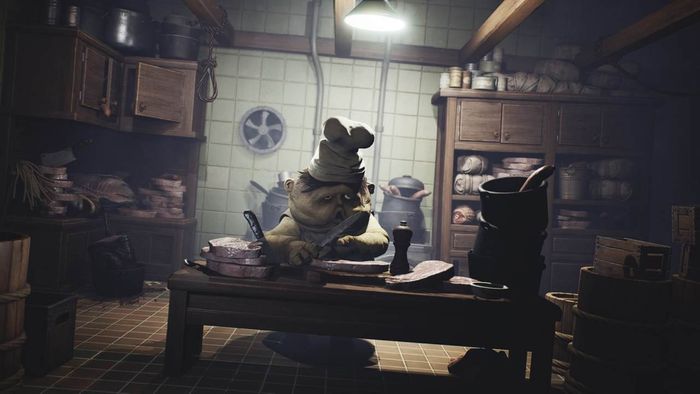
The most important moments in any horror game are in between the screams — the quiet stillness when a monster isn’t chasing you yet, but you know they will be soon. It’s in those small moments that Little Nightmares 2 is at its best and scariest.
Little Nightmares 2 is a horror puzzle-platformer developed by Tarsier Studios, the same studio behind the original Little Nightmares. Players control Mono, a small, mouse-sized child exploring a regular-sized world full of monsters and dark secrets. Most of the game is set inside a dark and twisting city, where it seems to always be raining and always be nighttime. The city’s population is controlled by a mysterious television broadcast that makes everyone almost entirely passive, but it’s the grotesque monsters that also inhabit the city that offer the biggest threat to Mono as he attempts to escape.
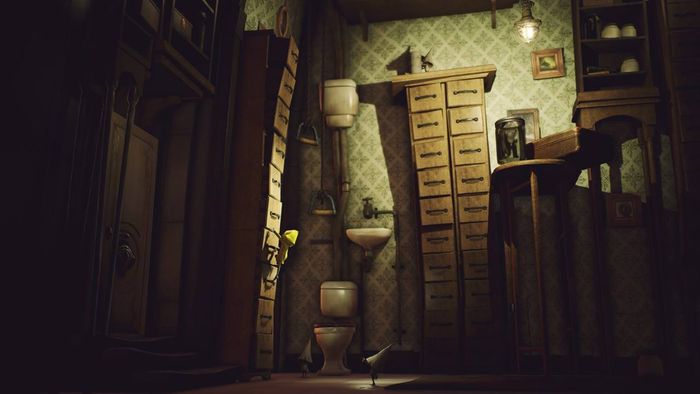
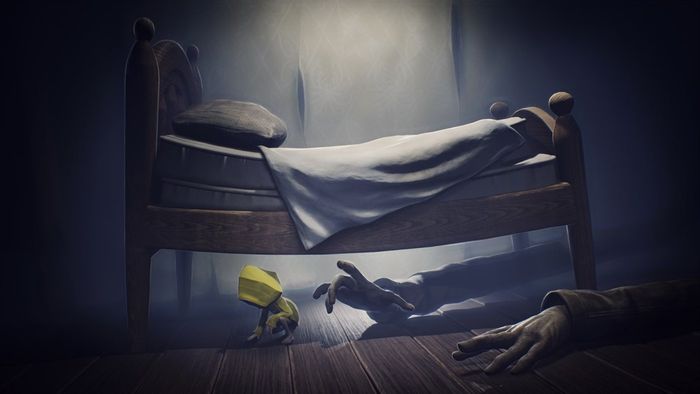


The haunted buildings within the city make up most of Little Nightmares 2’s levels. One of the levels is a school filled with deadly marionette students that will chase you on sight and a deranged teacher with an extendable, rubbery neck. Another section of the game is set in an abandoned hospital where mannequin patients are strewn throughout the building on gurneys, in wheelchairs, or sometimes just thrown limblessly in the hallways.
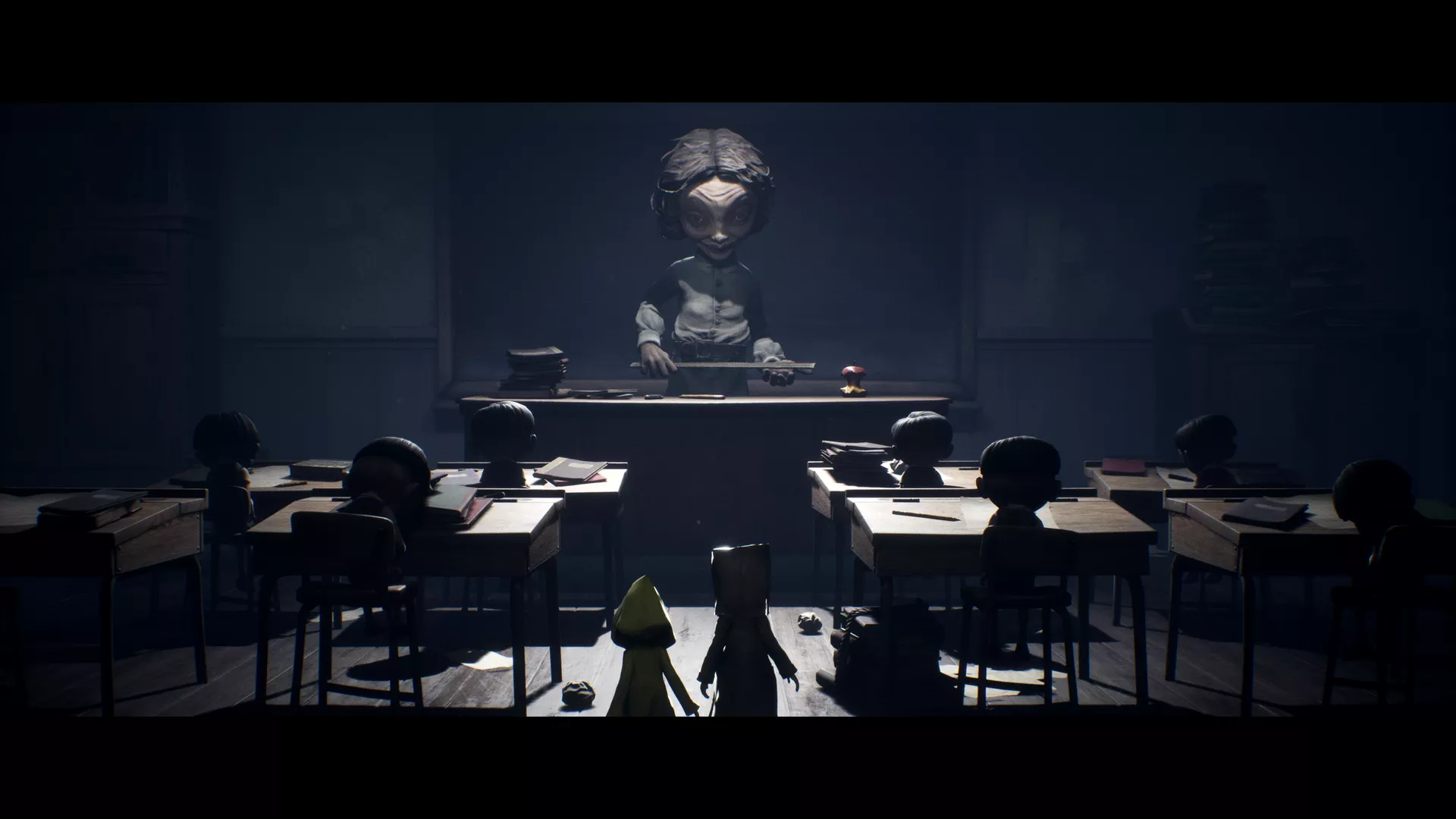
Still images of these environments would be chilling enough on their own, but when they come alive with Little Nightmares 2’s excellent and off-putting animations, they’re much scarier. Enemies limp toward you with jagged, uneven motions and at varying speeds that make them feel inhuman, and each of the game’s big monsters has unique animations that help make them even grosser and creepier than their regular-enemy counterparts.
Another layer to the game’s atmosphere is its outstanding sound design. Every moment of Little Nightmares 2 is packed with the creaking and groaning of old pipes
Kind reviewer
I could never tell if these were caused by some far-off enemy, or if they were triggered because I stepped on just the right floorboard, but their timing helped add an extra layer of subtle discomfort to actions as small as walking through an empty room.
LIFE-SAVING SOLUTIONS
The primary way that you interact with all the ominous environments of Little Nightmares 2 is through various types of puzzles, which you solve to progress from one section to the next. Most of these are fairly simple, but they get a little more challenging as the game goes on.
Her playing could mask the sounds of me dragging the stool, but I had to be careful to listen to the music, because when I heard the melody ending it meant I needed to freeze in place or be caught instantly. These puzzles aren’t exactly ground breaking, but they fit Little Nightmares 2’s world well and create consistently novel ways to interact with the game’s creepy world.
The one time I died in this section, I got treated to one of the game’s many blood-curdling death animations — which often made failing feel worthwhile to experience at least once, just to see what horrifically creative death Tarsier Studios had come up with.
Little Nightmares 2 also asks you to perform some basic platforming, with mixed success. The game’s jumping feels imprecise and a little awkward. When I was controlling Mono, I often felt like I had only a vague command over where he was going to leap next, which occasionally led to me missing jumps that I felt like I should have made. These sections also occasionally suffered from a lack of indication as to where to go next, which could result in some frustrated wandering.

TRULY ALONE
Little Nightmares 2 has a secret weapon for setting its tone and creeping you out. Instead of the total loneliness of the first game, Tarsier Studios has added a companion in the sequel named Six — the protagonist of the original game. Throughout most of the game’s levels, Six wanders around with you, assisting in platforming sections to help you reach faraway ledges, leading you in the right direction if you seem stuck, or even just holding your hand as you run through a particularly dark and spooky building. Yes, there really is a “hand-holding” button — and it is adorable.
In some of the game’s most stressful, scary, and climactic moments, Six gets separated from Mono, leaving you more alone than you could ever have felt in the original game. Even when I was only separated because she had boosted me up to a ledge we couldn’t both reach, levels felt far lonelier and the game’s enemies got even creepier.
In one particularly effective section, Six gets kidnapped by one level’s villainous force. Suddenly, I was worried that I might not be able to save my companion and instead would have to continue through the world alone, which introduced an entirely new kind of fear that was far more effective than just finding another way to watch my character die. It felt permanent in a way that nothing else in the game could.
NO FIGHTING CHANCE
Sometimes, Little Nightmares 2 abandons its smart puzzle-platformer style in favor of sections that are more action-oriented. Most of these scenes involve the game’s monsters discovering Mono and chasing him down, or a small bit of combat between enemies that are Mono’s size. These sections lean into all of the things that Little Nightmares 2 is worst at.
Other games

SpiderMan Miles Morales DLC PS5

The Legend of Zelda – Breath of the Wild Switch (EU)
These action scenes, which play out like a section from an Uncharted game, are bland and punishing. While I was sprinting down a random hallway I’d often get stuck on awkward geometry, or fall victim to the game’s less-than-ideal camera angles before getting devoured by the unforgiving boss that was chasing me. Or, during the combat, I’d swing at an enemy, only to find out that, thanks to a trick of the camera, my aim was off by a bit and I’d be forced to start the section again.
All of these control and camera shortcomings are easy to look past in the game’s slower moments. The stealth sections are forgiving enough that an uncoordinated, controller-related misstep generally won’t doom you, and the platforming sections lack the fall damage that would make failure overly frustrating. But when Little Nightmares 2 morphs into an action game, these missteps become punishing, and the death animations that are so unsettling and exciting to watch the first time around get stale by the third or fourth experience of trial and error.
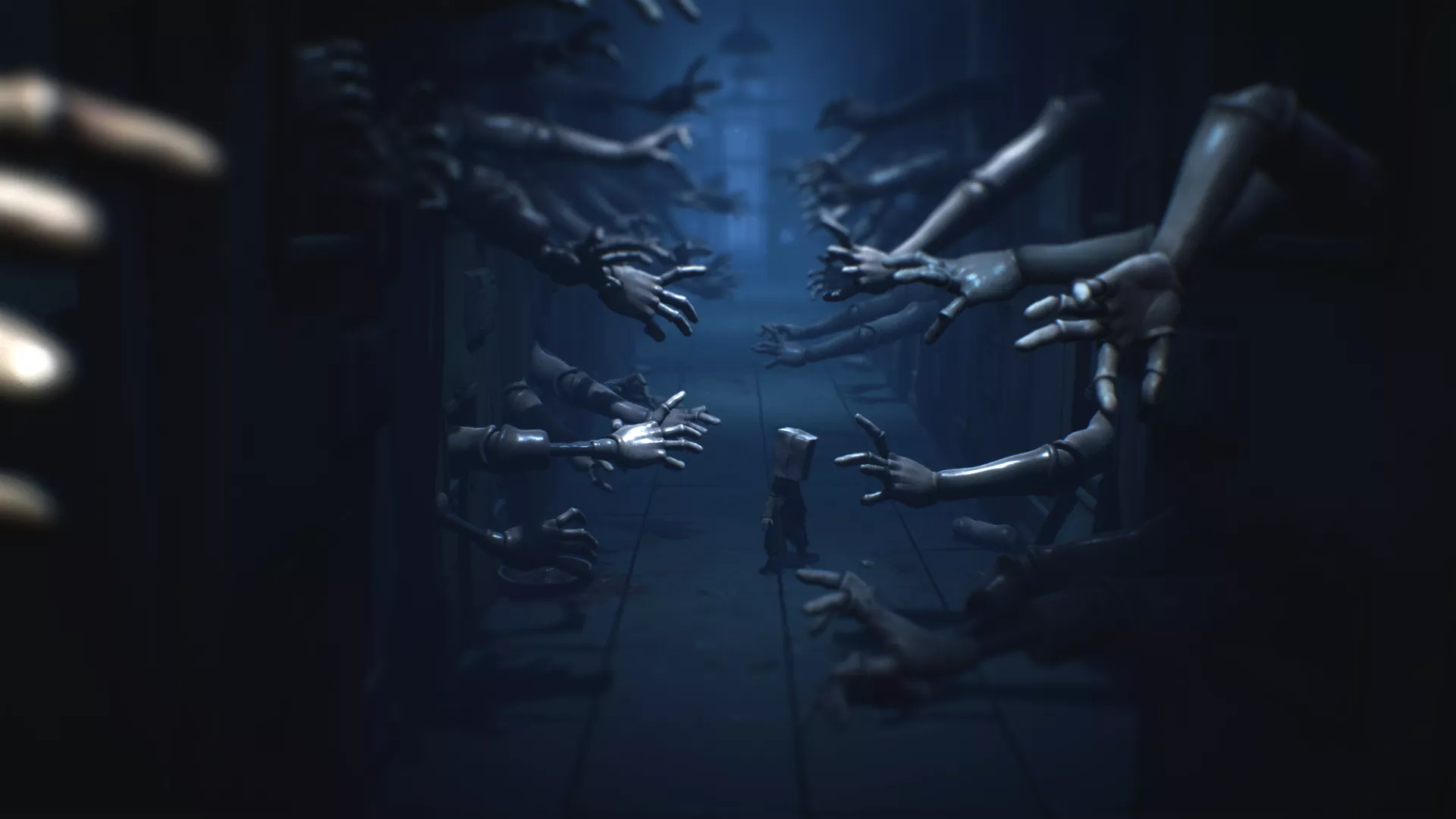
But in Little Nightmares 2, that release isn’t actually necessary. Because failure is an option in any of the game’s stealth sections, there’s a built-in moment of tension relief with every death. When you’re carefully sneaking around an enemy’s eyeline you’re already tightly wound, and when you’re spotted, the game’s fantastic score flips to a string crescendo that still surprises me, even after the tenth time I’d heard it. Each of those little scares was infinitely more effective than the game’s prolonged chase sequences, and they were better designed around the game’s control and camera-related limitations.
When Little Nightmares 2 sticks to the things it does best, it’s a great horror game that feels entirely unique in its scares. Almost everything, from Mono’s perspective as a tiny, almost-powerless character in a giant world, to the grotesque monster designs, to the mysterious city that’s been taken over by its televisions, combines to create a wonderfully upsetting world that I didn’t want to stop exploring, even after the game ended.